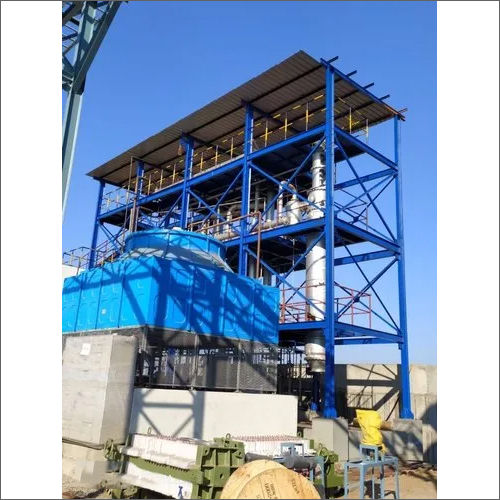
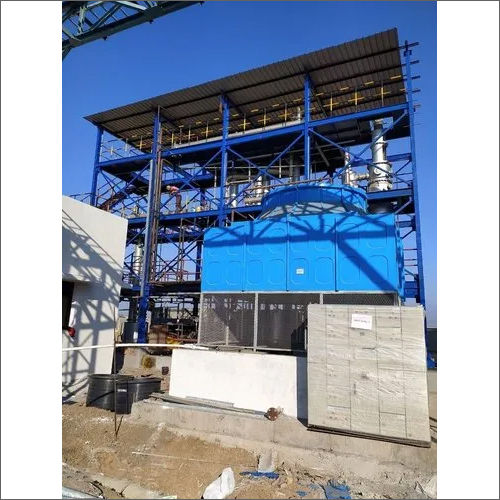
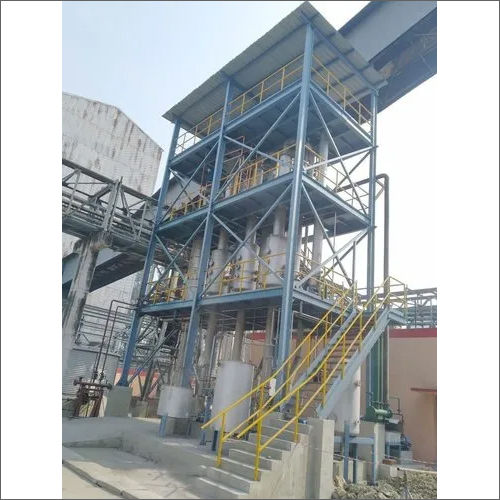
About Zero Liquid Discharge Treatment Plant
Specification
| Installation Type | Prefabricated |
| Capacity (KLD) | 50 KLD |
| Application Industry | Food Industry |
| Inlet Flow Rate(m3/day) | 50 m3/day |
| Air Blower Count | 1 Blower |
| Air Blower Power | 0.25 KW |
| Material Of Construction | Mild Steel |
Highly Efficient Water RecoveryUtilizing multiple treatment technologies such as RO, MEE, crystallizer, UF, and NF, the ZLD Treatment Plant maximizes water recovery, achieving up to 98% recycle rate. The process delivers purified water with conductivity below 10 S/cm, making it suitable for demanding industrial applications.
Compact, Customizable, and SafeDesigned for space efficiency, the plant features a compact, skid-mounted build and customizable capacity (1-500 KLD). Advanced safety measures, including automatic interlocks and emergency stop functions, provide reliable, secure operation under varied industrial conditions.
Compliance and SupportAll treated water meets or exceeds CPCB/SPCB discharge norms, ensuring regulatory compliance. Users benefit from comprehensive onsite maintenance, operational training, and customizable design to fit unique requirements, all backed by robust after-sales service.
FAQ's of Zero Liquid Discharge Treatment Plant:
Q: How does a Zero Liquid Discharge Treatment Plant work in industrial applications?
A: The ZLD Treatment Plant processes industrial effluent through stages like reverse osmosis (RO), evaporators, crystallizers, ultrafiltration (UF), and nanofiltration (NF). Optional pre-treatment with chemical dosing or softeners prepares feedwater (conductivity 500-2500 S/cm). Advanced filtration and polishing units ensure nearly all water is recovered, leaving minimal liquid waste.
Q: What types of industries can benefit from installing a ZLD Treatment Plant?
A: This system is ideal for sectors with strict wastewater standards, such as textile, pharmaceutical, chemical, and power plants. Its ability to deliver high purity water (up to 99%) and meet CPCB/SPCB norms makes it suitable for environments requiring responsible wastewater management and water recycling.
Q: When should pre-treatment or post-treatment options be considered?
A: Pre-treatment (chemical dosing or softeners) is advised when the feedwater contains high hardness or contaminants. Post-treatment, including polishing units or remineralization, is recommended for applications demanding consistent water quality or additional mineral adjustment before reuse or discharge.
Q: Where is the ZLD Plant typically installed, and what is the required footprint?
A: Thanks to its compact, skid-mounted design, the ZLD Plant requires minimal space and can be installed indoors or outdoors at industrial sites. Installation is adaptable to existing infrastructure, making it suitable for both new and retrofit projects.
Q: What are the operational benefits of the PLC-based control system?
A: The PLC-based control system automates essential processes, ensures precise monitoring, and enhances safety with features like automatic interlocks and emergency stop. This reduces manual intervention, streamlines batch or continuous operations, and improves overall system reliability.
Q: How does onsite service support and training benefit plant operators?
A: Onsite maintenance ensures optimal plant performance and longevity. Comprehensive training equips operators with the necessary skills for system handling, troubleshooting, and routine checks, thereby minimizing downtime and maximizing operational efficiency.
Q: What sustainability advantages does ZLD technology offer?
A: By recycling up to 98% of water, the ZLD Treatment Plant minimizes environmental impact and operational discharge. This promotes resource conservation, supports compliance with regulatory norms, and helps industries achieve sustainability goals while maintaining cost efficiency.





 Send Inquiry


 Send Inquiry


