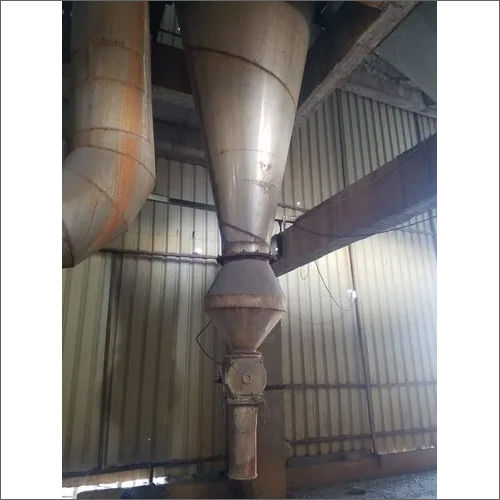
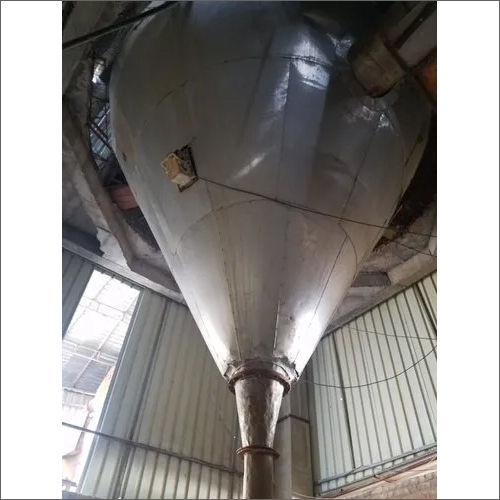
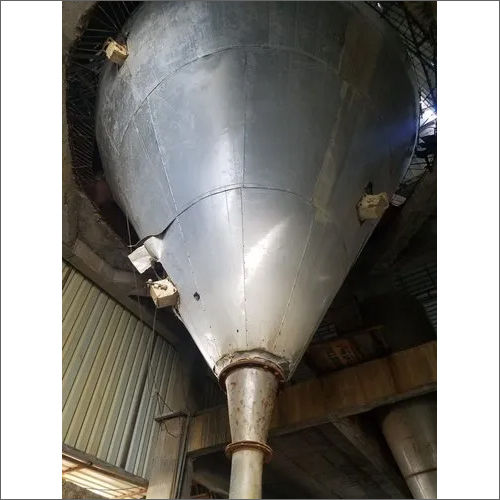
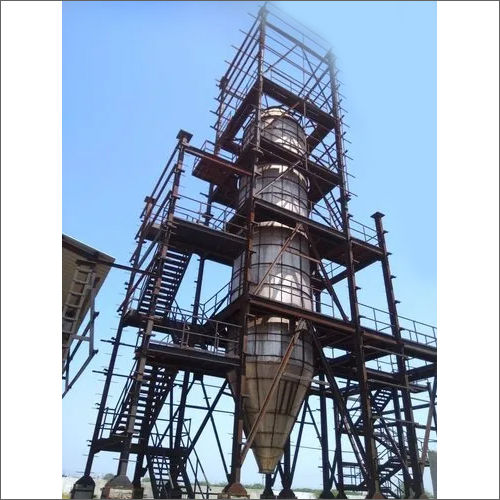
About MS Effluent Spray Dryer
The MS Effluent Spray Dryer is a machine that is used to evaporate water from effluent, which is industrial wastewater that contains organic or inorganic salts. The machine operates at high temperatures, such as 500 c to 550 c, to evaporate the effluent using direct solid fuel-fired hot air generators. The MS Effluent Spray Dryer uses cheap solid fuels such as agro waste, wood, briquettes, white coal, imported coal, lignite, etc. to evaporate the effluent economically.
Specification
| Capacity | 10 TPH |
| Material | MS |
| Usage/Application | Industrial |
| Max Temperature | 55 Degree C |
| Automation Grade | Semi-Automatic |
| Voltage | 415V |
| Phase | 3 Phase |
| Frequency | 50 Hz |
| Power | 11 kW |
Equipped with a modern PLC/SCADA system, the MS Effluent Spray Dryer ensures precision in process management. Operators benefit from real-time monitoring and automation, leading to increased operational efficiency, enhanced safety, and consistent drying quality. Customizable settings make it suitable for a broad range of materials and process requirements.
Versatile Applications & Robust DesignWith its stainless steel construction (304/316), the dryer is engineered for longevity and resistance to harsh chemicals. It's ideal for effluent wastewater treatment, as well as pharmaceutical, food, and chemical industries. Suitable for both slurry and liquid feeds, this system meets diverse industrial drying needs.
FAQ's of MS Effluent Spray Dryer:
Q: How does the MS Effluent Spray Dryer process different types of feed?
A: The dryer handles both slurry and liquid effluent feeds by atomizing the material through a rotary or pressure nozzle, creating fine droplets that rapidly dry in hot air, resulting in efficient moisture removal.
Q: What industries benefit most from using this spray dryer?
A: Industries such as effluent wastewater treatment, pharmaceuticals, food processing, and chemicals benefit from the dryer's flexibility, robust construction, and high product recovery efficiency.
Q: When should a pressure nozzle be used compared to a rotary atomizer?
A: A pressure nozzle is ideal when a wide range of atomizing pressures (2-10 bar) is required for finer control, while a rotary atomizer suits high-capacity processing up to 25,000 rpm, depending on material and desired droplet size.
Q: Where can the MS Effluent Spray Dryer be installed?
A: The system is designed for customization according to plant layout and can be installed in any industrial facility requiring effluent or material drying, with all components originating from and supported in India.
Q: What are the key benefits of using this spray dryer for effluent treatment?
A: The primary benefits include up to 98% product recovery efficiency, reduced waste volume, lower environmental impact, and cost-effective operation with automated controls for reliable 24/7 performance.
Q: How is the air flow and temperature managed during operation?
A: Air flow (250 to 5000 Nm3/hr) and temperature (up to 250C) are both adjustable via the PLC/SCADA system, ensuring optimal drying for various feed types and production needs.
Q: What safety and compliance features are included with this dryer?
A: Constructed from stainless steel (304/316) for chemical resistance, outfitted with cyclone separators or bag filters for safe discharge, and equipped with a noise level below 80 dB for operator comfort, the system meets rigorous industrial safety standards.





 Send Inquiry


 Send Inquiry


